
What we treat!
We understand that each client is unique in how they present
with their condition and thus how they will respond to
treatment. We are able to identify and adapt our treatment
techniques to suit the needs of the individual.
Conditions we treat:
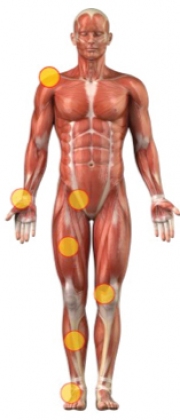
- Headaches and sinusitis
- Neck and back pain
- Sports injuries
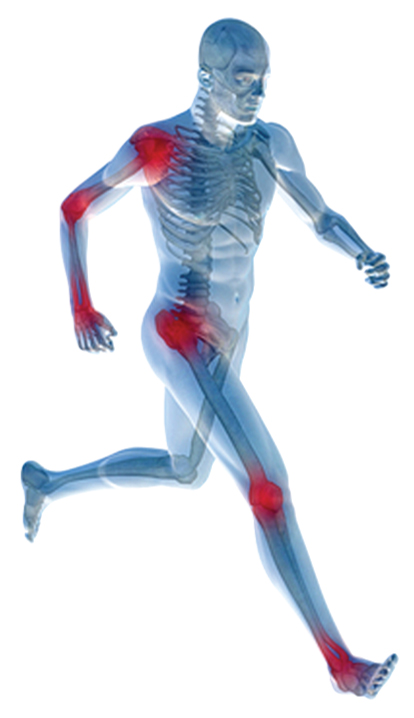
- Musculoskeletal injuries e.g. joints and muscles injuries
- Chest conditions
- Orthopaedic (pre and post)
- Surgical pre and post
- Neurological conditions
- Peadiatrics (congenital complications, chest infections, neurology and orthopaedics)
How we treat!
Joint mobilization techniques with Maitland, Mulligan and Mckenzie
Mobilization of joints involves passive movements applied to a joint. It is applied
in an oscillatory manner or as a sustained stretch to relieve inflammation and/or
stiffness in joints. Manipulation on the other hand, is a term that embraces all
kinds of passive movements, or can be viewed more specifically as a small
amplitude manipulative thrust technique performed with speed.
Mobilization and manipulation are used by a skilful physiotherapist who is able
to asses which joint needs mobilization, the amplitude and type of mobilization.
The Physiotherapy Studio has highly qualified physiotherapist who trained
under the Orthopaedic Manipulation Therapy Course (OMT) and have had
successful results when treating using these techniques on joints.
Myofascial Release Therapy and Myofascial Trigger point Therapy
Myofascia is a type of connective tissue that surrounds muscles and groups of
muscles. Fascia also surrounds blood vessels, nerves and organs; it binds some
structures together, while permitting others to slide smoothly over each other.
Many patients seek myofascial treatment after losing flexibility or function
following an injury or if experiencing on-going back, shoulder, hip, or virtually
pain in any area containing soft tissue. In addition, pain can also be generated
from damaged myofascial tissue itself, sometimes at a 'trigger point' where a
contraction of muscle fibres has occurred. In either case, the restriction or
contraction inhibits blood flow to the affected area. Stress, tension and postural
problems can cause the fascia to loose flexibility. Myofascial Therapy (also known
as myofascial release therapy or myofascial trigger point therapy) is a type of
safe, low load stretch that releases tightness and pain throughout the body
caused by myofascial pain syndrome, which describes chronic muscle pain that is
worse in certain areas known as trigger points.
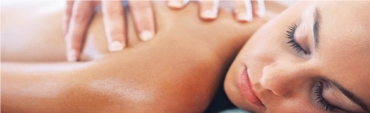
Specific releases to different parts of the body vary and include application of
pressure or sustained low load stretch to the affected area. This hands-on
treatment can last at least 30-45 minutes, conducted in a relaxing and private
room and can be continued on consecutive days. This stimulates the self-repair
process, circulation to facilitate delivery of nutrients and removal of waste
products. This treatment is complimented by other physiotherapy techniques
namely joint mobilization and heat therapy.
Neural mobilization
Neural mobilization is a treatment modality used in relation to pathologies of the
nervous system. When nerves are injured, they lose dynamic flexibility and
function. Injuries to nerves can be caused by impingements from joints, discs of
the spine and soft tissue restrictions. Many patients whose symptoms don’t
respond to other physiotherapy techniques and present with a chronic history of
referred symptoms like pain, numbness, or tingling into the arms or legs may
respond to Neural Mobilization. Every patient that presents with referred
symptoms or pain that has been unresponsive to localized treatment receives a
complete neural tension evaluation. Neural tension testing is a way for us to
determine the extent of nerve involvement. By mobilizing a nerve, we can
determine, in combination with Maitland joint mobilization manual traction and
sensitizing manoeuvres, whether your pain is originating from the spine or the
periphery. We can then perform Neural Mobilization techniques utilizing
controlled neural tension manoeuvres to mobilize the nerve up and down.
This mobilization is done in positions that allow the nerve to slide and glide from
the structure causing impingement. This technique may be complimented by
other physiotherapy modalities like strapping to offload the area that is pinching
the nerve.
Strapping with Mc Connel and Kinesio
McConnell Taping Technique
McConnell Taping is a strapping or bracing technique using a super-rigid, cotton
mesh highly adhesive tape (LuekoTape®). Most commonly used for
pattelofemoral syndrome, shoulder subluxation, lumbar, ankle instability,foot,
and hip impingement. It is recommended to be left on for no more than 18 hours
due to in-adverse skin reaction. It better left on for a shorter period of time due to
its constricting and suffocating feel. It is meant to affect the bio mechanics and
facilitates neuromuscular re-education of the affected condition. It works very
well on sprained ankles and can be used as a preventative technique during
sports activity.
Kinesio Taping is a therapeutic taping technique, it not only offers support that is
required, but assists in the rehabilitation of the affected area as well. This
technique uses a highly specific designed tape that works with the body allowing
full range of motion (ROM). This technique does not adversely affect the bio
mechanics of the patient. The latex free Kinesio Tape makes it hypoallergenic and
safe to use from the paediatric to geriatric populations. There’s no compression to
the skin, it is "light to the feel" allowing comfortable wear over a 3 to 5 day
period. The water resistant fabric is able to whisk away moisture and gives you
the ability to bathe as normal. Kinesio Taping works with the lymphatic system
to increase circulation of blood and lymph in order to rehabilitate and relieve
pain. Used for virtually all clinical conditions. Most clients with postural
problems benefit from this technique. Our physiotherapist have attended
numerous courses on the application of this tape, this has helped most of their
clients.
Sports rehabilitation
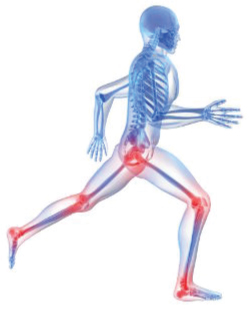
Injuries can occur in all sports, whether it is at a recreational, competitive, or elite
level. Improper training, muscle weaknesses and imbalances, and structural
abnormalities are common causes of injuries in sport. Poor management of these
injuries can lead to chronic and recurrent problems in the future. As such, proper
training and guidance in sports is essential to prevent injuries from occurring.
A variety of sport related injuries can be treated at our clinic:
- Achilles tendinopathy
- Shin splints
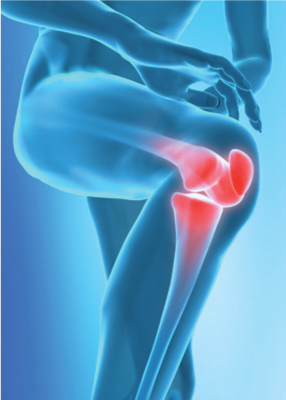
- Patellofemoral Pain Syndrome
- Runner’s, Jumper’s knee
- ACL tears, meniscal injuries
- Groin strain
- Sports hernia
- Lumbar strain
- Rotator cuff injury
- Tennis, Golfer’s elbow
At the Physiotherapy Studio, our physiotherapist can help you identify your
risks for injury and develop a proper training and exercise program to prevent
such injuries from occurring. If you have already sustained an injury or are
currently suffering from one, our physiotherapist can help you optimize your
recovery and get you back to pre-injury state by using appropriate exercise
prescriptions and treatments.
Neurology Rehabilition
Neurological conditions seen in the rooms vary, they include:
- Head injury
- Spinal cord injury
- Motor neurone disease
- Stroke
- Cerebral palsy
- Parkinson's disease
- Multiple Sclerosis (MS)
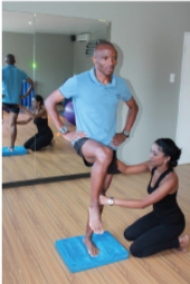
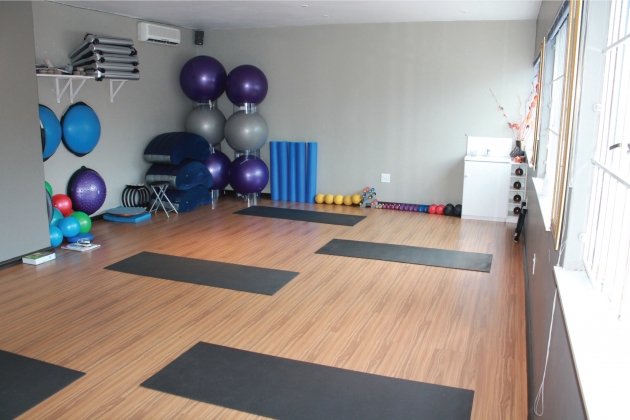
We have a rehabilitation studio with the adequate equipment for neurological
conditions seen and the physiotherapist can provide house calls for the clients
who are not able to reach our rooms due to their condition.
Pilates and Back rehabilitation
The Pilates method of body conditioning is a unique system of stretching and
strengthening exercises developed over 90 years ago by Joseph H. Pilates. It
strengthens and tones muscles, improves posture, provides flexibility and
balance and creates a more streamlined shape.
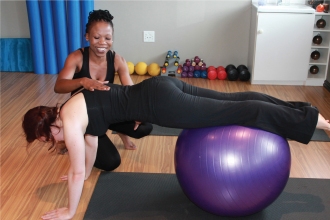
Pilates works on body by connecting the mind to the body. In each of our mat
classes we focus on building strength and control of the deep core muscles,
improving posture and alignment, increase body awareness and control, and
improve co-ordination and balance. In all the movements the 10 Principles of
Pilates are emphasized:
- Awareness
- Breath
- Balance
- Concentration
- Centre/Core
- Control
- Efficiency
- Flow
- Precision
- Harmony
Pilates is a low impact and fun way of getting and staying fit. It strengthens and
lengthens the stabilising and mobilising muscles of the body. Every joint
movement needs stability as it moves out of its base of support. The skeletal
structure of our bodies helps support our limbs with daily activities like walking
and getting up from sitting to standing. Our centre/core muscles found around
the pelvis and spine are key stabilisers to movement as they form a bridge
between the upper body and lower body. These muscles loose endurance and
flexibility when placed in unaccustomed positions like sitting in front of a
computer all day. These unaccustomed positions cause neck and back ache. Even
elite runners and sports man who present with overuse injuries benefit from
Pilates as it strengthens the stabilising muscles and off loads the mobilisers while
lengthening them.
The combination of Pilates and Physiotherapy is MAGIC especially when the
Physiotherapist has a sound knowledge of anatomy and physiology of the
human body. Our Physiotherapist have that knowledge at a Mastery level.
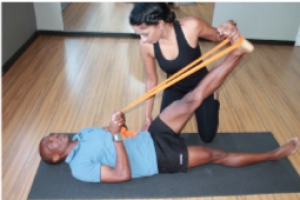
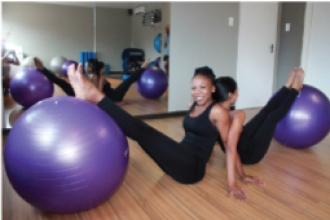
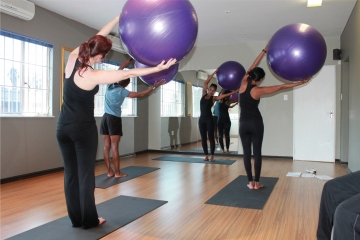
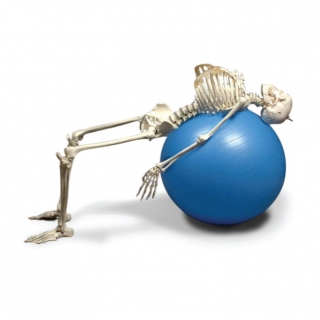
In order to add variety and take the Pilates exercises to a different level we
incorporate the use of swiss balls, therabands, mini-balls, foam rollers and magic
circles in our classes. Modifications are offered so that all levels will benefit from
the classes. All students are encouraged to listen to their bodies to see what
modification is appropriate. The quality of movement is valued over the quantity
of repetitions.
Pilates great for pre & post-natal moms, pensioners, home executives, executives,
patients requiring rehabilitation and basically anyone who is wanting to increase
core strength, improve posture and muscle tone.
Electrotherapy modalities
Electrotherapeutic modalities are commonly used in the treatment of many
patients experiencing back, neck and other musculoskeletal problems. We
frequently use electrotherapy and combine it with physiotherapy modalities
namely joint mobilisation and dry needling.
- Ultrasound Therapy
Ultrasound helps in acute injuries for example muscle contusions. Sound is
mechanical vibration. The human ear responds to these vibrations in the range
20Hz to 20kHz. Sound above 20kHz is called ultrasound. Therapeutic ultrasound
is sound in the range 500 kHz to 5 MHz. We use 1MHz and 3MHz depending on
the area being treated. This sound caused vibrations. If the vibration is
continuous and regular a constant tone or frequency is produced. The vibration
or sound wave propagates through the soft tissue medium, and the cells of the
soft tissue pass on their vibration to neighbouring cells and series of
compressions and rarefactions are produced in the direction of travel of the
wave. As the sound wave passes through the soft tissue medium, causing
molecules to vibrate, some of the energy in the wave is converted from kinetic
energy to heat. This heat helps with circulation, movement of waste products
through the lymphatic system and provision of nutrients to promote healing.
- Interferential Current Therapy
Interferential current therapy (IFC) is the application of alternating mediumfrequency
current amplitude modulated at low frequency. We use it to decrease
pain, increase circulation and block nerve conduction according to a
physiological mechanism called the “pain gate control” theory. A claimed
advantage of IFC over low-frequency currents is its capacity to diminish the
impedance offered by the skin. Another advantage speculated for IFC is its
ability to generate an amplitude-modulated frequency (AMF) parameter, which
is a low-frequency current generated deep within the treatment area.
- Combination Therapy
Combination therapy involves the simultaneous application of ultrasound with
an electrical stimulation therapy. The main advantages of such a combination are
said to be in ensuring accurate localisation of ultrasound treatment to provide
increased accuracy/effectiveness in treating deeper lesions and treating trigger
points. The combination of ultrasound with interferential therapy achieves
greater and effective treatment depth.
- TENS
A Transcutaneous Electrical Nerve Stimulator, more commonly referred to as a
TENS unit, is a small, battery-powered, portable muscle and nerve stimulation
machine that can be used at home to help control pain. A TENS unit is often
times recommended to assist in reducing neuropathic pain, but is not suggested
for those with chronic pain.
- Ice and Heat Therapy
Depending upon the severity of your condition, both ice and heat can reduce
pain or the inflammation of injured muscles and nerves. Cold therapy is often the
best immediate treatment for recent injuries. It helps reduce swelling and control
pain immediately. Unlike cold therapy, heat therapy is generally used for those
with chronic pain from previous injuries. Heat therapy not only reduces the
patients’ pain, but it also relaxes the sore, stiff muscles and/or joints and
increases circulation. Heat and ice can be combined with interferential therapy
which aid in decreasing symptoms.
Dry needling
Dry needling is a form of physiotherapy used to treat musculoskeletal pain and
dysfunction. It is an invasive form of myofascial release in which thin, flexible
needles are inserted into the body. The places the needles are placed in the body
is determined by accurate anatomical knowledge based on sound scientific
reasoning and anatomy knowledge that our Physiotherapist are masters in. This
is different to acupuncture, which is a treatment technique related to Chinese
Medicine, and takes a philosophical rather than empirical approach to the body.
- For which conditions can Dry Needling be used
Dry needling can be used to treat many musculoskeletal conditions. We realise
the importance that the use of the technique outside of a balanced, professionally
designed treatment regime that includes therapeutic exercise, manual therapy
and patient education is not desirable. That said, the technique is effective in
treating back and neck pain, muscle strains, tight and painful scars, headaches,
shoulder pain, and a myriad of other problems related to the muscles, pain and
how the body copes with these.
- What are the Side Effects of Dry Needling
There are relatively few side effects, which is one of the great advantages of this
effective therapy. The more common ones include discomfort from the needling
procedure, bruising, and occasionally a very small amount of bleeding. Less
commonly, patients may experience transient feelings of drowsiness, euphoria,
tearfulness, sweating or chills.
- How Does It Work?
Dry needling works in at least 3 different ways depending on what you do with
the needle. Firstly, the simple insertion of a needle and the subsequent
stimulation of the needle gives you a rush of natural painkillers called opioids,
and a feel good hormone called serotonin. These actively reduce your pain, and
this enables you to exercise more effectively. Secondly, using a needle to
stimulate a trigger point in a muscle frees the muscle up to work more efficiently
by causing it to twitch and release. These helps the local muscle, to both contract
and lengthen better, and will allow you to have more power and better flexibility
in the muscle. This also reduces local muscle pain. Thirdly, by using a
combination of needles in different parts of the biomechanical system, your
therapist can help you align and balance out your movement patterns as a
whole. The exact reasons for the undoubted success of all three approaches is
quite complex, and requires a longer explanation.
Chest physiotherapy
Chest physiotherapy (CPT) is a way to help get mucus out of the lungs. It
involves a group of physical techniques namely turning, postural drainage, chest
percussion and vibration, and specialized cough techniques which are directed to
assist the coughing up of mucus. Any or all of these techniques may be
performed in conjunction with medicinal aerosol therapy (i.e. bronchodilators or
mucolytic) depending on the prescription of the referring Doctor. It is indicated
for patients in whom cough is insufficient to clear thick, tenacious, or localized
secretions. Examples include:
- Cystic fibrosis
- Bronchiectasis
- Atelectasis
- Lung abscess
- Neuromuscular diseases
- Pneumonias in dependent lung regions.
CPT can be given to the general public including paediatrics and geriatrics. The
physiotherapist may use a suction catheter to eliminate secretions when the
cough is not effective enough. This is commonly used on babies under 2 years
because they are not able to cough up secretions effectively and on command.
Suctioning is a safe and effective way of clearing secretions, it’s done while lying
sideways to prevent aspiration, a catheter is inserted into the nasal passage to the
back of the throat to stimulate a cough reflex and once the child coughs the
secretions are suctioned out.
Our Physiotherapists are skilful in assisting the clearing of secretions using CPT
and they use it in treating patients in the hospital, ICU and High Care, as well as
patients in the rooms.
Postural and ergonomic correction
Posture is defined as the way you position your body upright against gravity
while standing, sitting or lying down. Good posture involves training your body
to stand, walk, sit and lie in positions where the least strain is placed on
supporting muscles and ligaments during movement or weight-bearing
activities. Our bones hold us up, our joints link our bones, our muscles move the
bones around the joints and our nerves facilitate control of the whole. The key to
good posture is correct joint alignment, good muscle activity; good balance and
good conductivity of the nerves that control are all part of the picture.
Ergonomics is defined as the scientific discipline concerned with the
understanding of interactions among humans and other elements of a system,
and the profession that applies theory, principles, data and methods to design in
order to optimize human well-being and overall system performance -
International Ergonomics Association (IEA)
Providing education, advice and training about workplace posture is an integral
part of maximising the investment in employees. Employers now have to invest
huge amounts of management time to comply with employment and health and
safety legal requirements. Having our Physiotherapists present in Corporate
Wellness Clinics is an excellent way to minimise management time overheads.
In many businesses employees are the most expensive asset. It makes sense to
ensure that this asset can work most efficiently by having a physiotherapist
assess the asset and its environment. Therefore something that is fundamental to
the individual is fundamental to the employer as well. Modern life is bad for
posture and the chances are that any new employee may have and may develop
musculoskeletal problems. When this is tackled at its roots, management time is
saved; each employee will be giving better value for money, and the employer
achieves an advantage over its competitors who fail to act in this area. Enabling a
positive approach to posture is a serious competitive advantage.
Employers benefit from investing in workplace posture and ergonomics when
they use our Physiotherapists who have a sound knowledge on body
biomechanics.
There are three main areas of business life in which the employer will gain from
investing in improving posture at the workplace:
- greater efficiency through improved morale, higher productivity, and less absenteeism
- compliance with health and safety law
- reduction of the risks litigation from injured or stressed employees
Services Include:
An in depth assessment of your condition, proceeded withtreatment aimed at
reducing impairment, improving function and preventing re-injury.
A referral to other healthcare professionals and/or specialists can be made if
necessary.
We also offer corporate physiotherapy services. Please contact us for further
details


Follow us on:
Contact Us: 082 306 1282